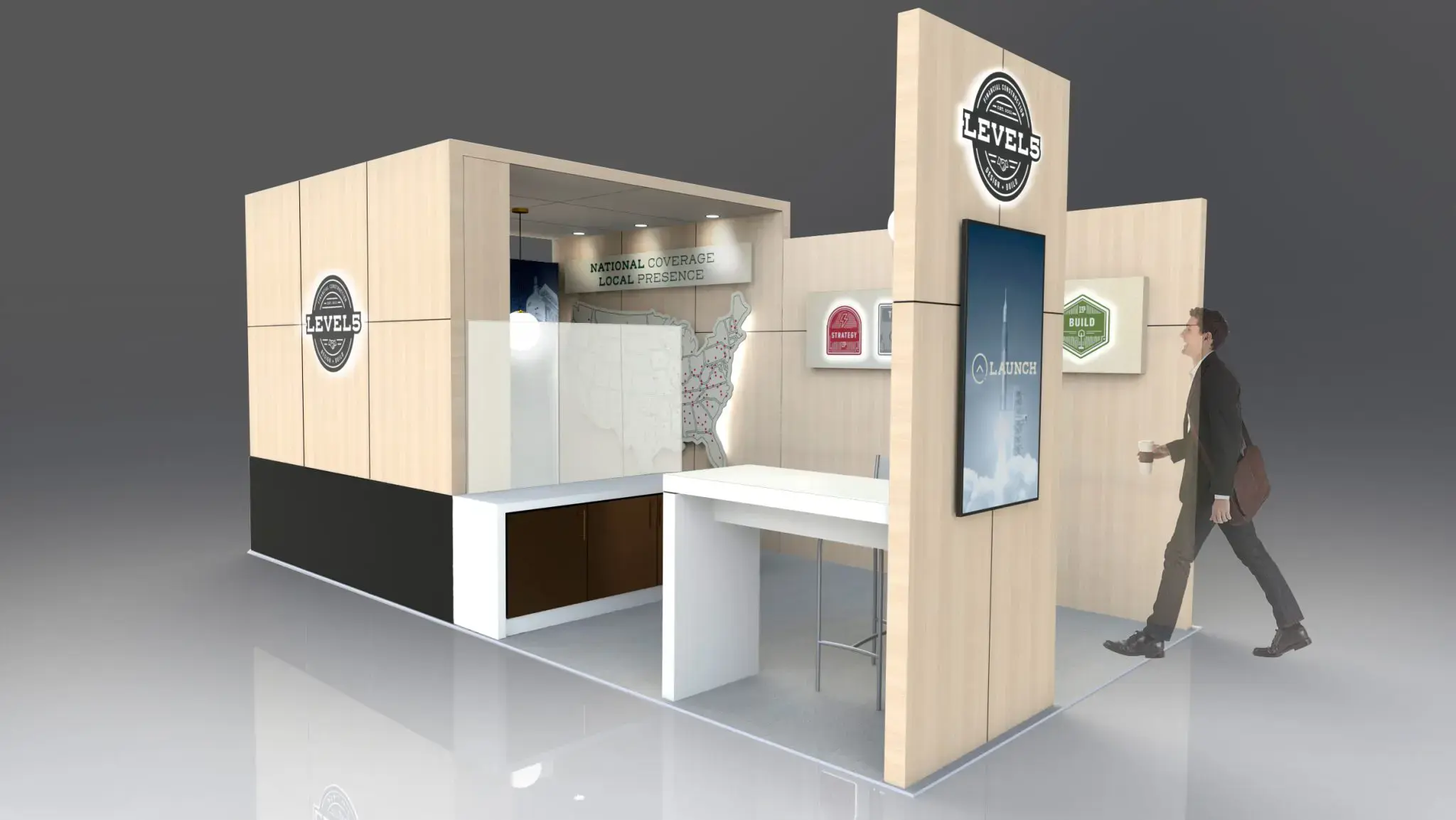
Backwall and backdrop displays in Omaha are the wall that holds a booth together: SEG fabric walls, pop-up backwalls, and the step-and-repeat backdrops that put a logo behind every photo.
The backwall is what attendees see first and from farthest away. It carries the headline message on the exhibit floor, and as a step-and-repeat it becomes the branded backdrop for press, sponsor photos, and hospitality stations.
Omaha gives this format two very different jobs. On the CHI Health Center floor, where the convention core grows to 420,000 square feet after 2027, a backwall anchors the inline or island booth. Around Berkshire Hathaway's Shareholder Week and a College World Series at Charles Schwab Field, the same skill set turns into step-and-repeat backdrops for hospitality and media.
Backwall & Backdrop Displays execution priorities
- Match the wall system to the booth: a tension SEG wall for a clean inline or island back, a pop-up for fast travel, a step-and-repeat for photo and media moments.
- Size the backwall against the venue's height rules and neighbor sightlines, since CHI Health Center caps inline heights differently than an island center.
- Check hanging-sign and rigging approvals for any suspended header or overhead element above the backwall against the specific building's rules.
- Build graphics so the headline reads from across the aisle and a step-and-repeat logo tiles cleanly with no awkward crops at the edges.
- Spec the frame and base for stability under booth lighting and traffic, and for the freight pattern the program rides between shows.
- Keep one named show-site lead on the install, the graphic tension, and the strike so the wall is set, flush, and lit by the contracted ready-time.
What Backwall & Backdrop Displays are
Backwall and backdrop displays are the upright graphic structures that anchor a booth or a photo moment. A tension SEG wall stretches printed fabric over an aluminum frame for a smooth face; a pop-up backwall accordions open for fast travel; a step-and-repeat tiles a logo pattern as a media backdrop.
These are the highest-visibility surfaces in the booth. The backwall carries the message attendees read from across the aisle, and the step-and-repeat is the surface that ends up in every sponsor and press photo.
Past the wall itself, the format ties into the broader booth scope: graphics, lighting that washes the face evenly, any approved overhead header, freight, labor, and supervision on one schedule and one orders list.
How Backwall & Backdrop Displays fit Omaha venues
On a downtown CHI Health Center date the backwall is engineered against MECA's published exhibitor kit — inline height limits, hanging-sign approvals, and neighbor sightlines all shape how tall and how deep the wall can run.
The step-and-repeat job lives in Omaha's biggest moments. Visit Omaha counts more than 30,000 Berkshire Hathaway attendees coming downtown each May, and a College World Series at Charles Schwab Field fills the tourism core, both of which lean on branded backdrops for hospitality and media.
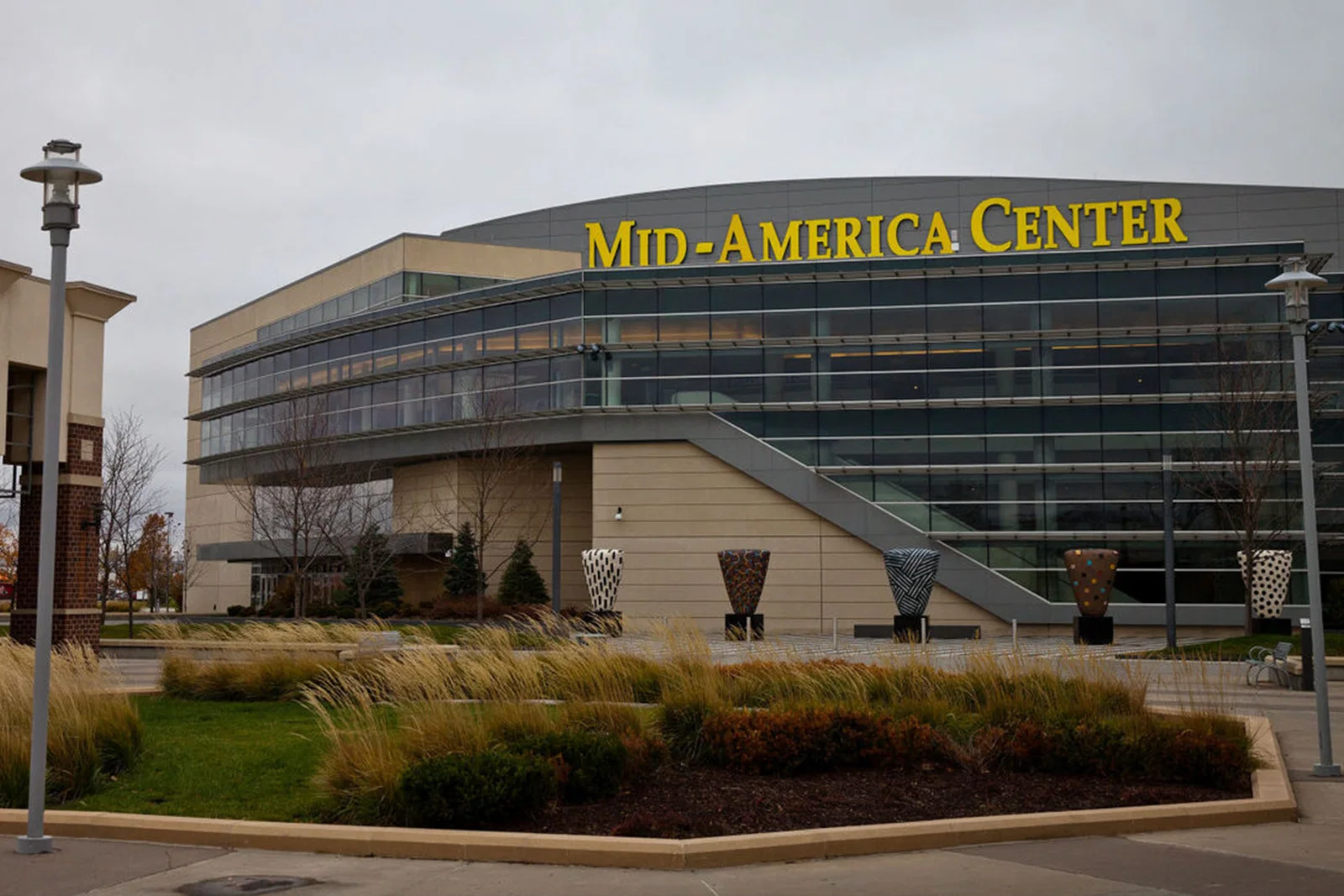
Across the river the Mid-America Center in Council Bluffs runs its own facility kit, and non-hall venues like the Omaha Design Center and Steelhouse Omaha host activations where a backdrop sets the whole scene. The design accounts for each building.
What's typically in scope for Backwall & Backdrop Displays
Scope covers the frame or pop-up system, the printed SEG fabric or step-and-repeat graphic, mounting and any approved header, lighting for the face, freight, labor, and supervision.
Where a suspended header or overhead element rides above the backwall, the rigging and hanging-sign order goes against the venue portal's published deadlines so the approval is in hand before move-in.
Closeout includes a graphic-tension check, a frame damage walk, outbound freight on the published window, and notes on what to refurb before the next show.
How a Backwall & Backdrop Displays project runs
Kickoff locks the show, the venue, the named approver, and the wall's job — exhibit-floor anchor or step-and-repeat backdrop — because that changes the size, the graphic, and the placement immediately.
Fabrication and printing close on a date that lets the wall ride the venue's advance-warehouse or direct-to-show window cleanly, with the SEG fabric or step-and-repeat reviewed before crating.
From load-in through strike one lead holds the floor plan, the rigging and lighting orders, the graphic tension, and the change-order log in a single set of hands.
Pricing and lead time for Backwall & Backdrop Displays
A pop-up backwall or step-and-repeat fits 4 to 8 weeks. A custom tension SEG wall with lighting and an approved header runs cleaner at 10 to 14 weeks because the frame engineering and the venue approvals take real time.
The bill breaks across the frame or pop-up system, graphics, lighting, any rigging or hanging-sign order, freight, labor, and supervision.
Mid-show graphic swaps or a step-and-repeat refresh between hospitality sessions are documented, priced against the portal where venue labor applies, and signed off before they hit the floor.
What a clean Backwall & Backdrop Displays program looks like
By the contracted ready-time the backwall is set, flush, and lit, with the SEG fabric pulled taut and smooth and the headline reading from across the aisle.
A step-and-repeat tiles cleanly with no cropped logos at the edges, lights evenly for photography, and holds up through a full day of sponsor and press traffic.
At strike the graphic comes down for a tension and damage check, freight goes out on the published window, and a closeout report flags any frame or graphic to refurb before the next Omaha date.
What separates strong Backwall & Backdrop Displays work
Strong work starts with the wall's job — anchoring an exhibit booth and serving as a photo backdrop are different briefs, and the size, graphic, and lighting follow from which one it is.
It engineers against the venue rules from day one, ordering rigging and hanging-sign approvals against the CHI or Mid-America Center portal before drawings commit.
And it builds the graphic to read at distance and tile cleanly, so the backwall that anchors the booth or frames the Shareholder Week photo looks as sharp on the floor as it did in the file.
Questions about Backwall & Backdrop Displays
What is the difference between a backwall and a step-and-repeat backdrop?
A backwall is the upright graphic structure that anchors a booth and carries its headline message. A step-and-repeat is a backdrop that tiles a logo pattern for photos and media. Both use similar frame systems, but the size, placement, and graphic differ by job.
Where do backwalls and backdrops run in Omaha?
Backwalls anchor booths on the CHI Health Center and Mid-America Center floors against each building's published kit. Step-and-repeat backdrops show up at Omaha's big moments — Berkshire Hathaway Shareholder Week, College World Series hospitality at Charles Schwab Field, and activations at venues like the Omaha Design Center.
How tall can a backwall be at CHI Health Center?
It depends on the booth type and MECA's published exhibitor kit. Inline heights are capped to protect neighbor sightlines, while an island center allows more. The wall is engineered against the specific rule, and any overhead header needs a hanging-sign approval.
How much lead time does a backwall need?
A pop-up backwall or step-and-repeat fits 4 to 8 weeks. A custom tension SEG wall with lighting and an approved header runs cleaner at 10 to 14 weeks because the frame engineering and venue approvals take real time.
Can a backwall double as a step-and-repeat for photos?
Often, yes. A tension SEG wall can carry a step-and-repeat graphic for a hospitality or media session and swap back to the booth message, which is useful around Shareholder Week or a College World Series program with both floor and photo needs.
Who runs a backwall or backdrop on site?
One named show-site lead. That lead owns the install, the rigging and lighting orders, the graphic tension, and the change-order log so the wall is set, flush, and lit by the contracted ready-time.